GameStop’s $55.5 Billion eBay Offer Could Redefine Gaming Retail and Online Resale
Meta Description: GameStop CEO Ryan Cohen is pursuing a $55.5 billion proposal to acquire eBay, aiming to reshape the future of gaming retail, collectibles, resale, and e-commerce.
GameStop is once again at the center of a major business shockwave. The company has submitted a proposal to buy eBay in a deal worth about $55.5 billion, a move that could completely change the future of both companies if it ever becomes reality.
The proposed acquisition would value eBay at $125 per share, using a combination of cash and GameStop stock. The offer represents a premium over eBay’s recent share price and comes after GameStop quietly built a stake of roughly 5% in the online marketplace.
At this stage, the proposal is non-binding. That means it is more of a formal opening move than a completed agreement. eBay has not agreed to sell, and the deal would require financing, negotiations, regulatory review, and shareholder support. Still, the announcement is one of the clearest signs yet that GameStop CEO Ryan Cohen wants to turn the company into something far bigger than a chain of video game stores.
A Surprising Deal With a Clear Strategic Logic
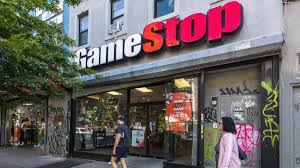
At first glance, GameStop buying eBay may seem unrealistic. eBay is much larger, with a market value far above GameStop’s. GameStop is still closely associated with retail stores, used games, consoles, and gaming accessories. eBay operates a massive global online marketplace used by buyers and sellers across countless categories.
But the strategic connection becomes clearer when looking at resale, collectibles, and online commerce. eBay is one of the most important platforms for used electronics, retro games, trading cards, refurbished devices, collectibles, sneakers, watches, and fan merchandise. These are categories that overlap with GameStop’s attempt to move beyond traditional game sales.
GameStop has spent years trying to find a stronger identity as physical game sales decline and more players buy digitally. eBay could provide the scale, marketplace technology, and seller network that GameStop does not currently have. In theory, a combined company could become a major hub for gaming hardware, collectibles, secondhand goods, and authenticated resale.
Ryan Cohen’s Transformation Plan
Ryan Cohen has never presented himself as a conventional retail executive. As the co-founder of Chewy, he built his reputation in e-commerce before becoming one of the most influential figures in GameStop’s modern story.
Since taking control, Cohen has focused heavily on cutting costs, reducing losses, and preserving cash. GameStop has closed stores, reduced headcount, scaled back parts of its business, and looked for ways to reinvent itself. That strategy has been controversial, but it has also left the company with a large cash position compared with many struggling retailers.
Cohen has previously said that buying another company could be either brilliant or foolish. The proposed eBay deal appears to be that idea taken to its most dramatic form. Rather than slowly growing GameStop, he wants to acquire a larger platform and use it as the foundation for a much bigger company.
If the acquisition succeeds, Cohen would reportedly lead the combined business. That would give him control over a major online marketplace and a chance to prove that his cost-focused management style can work at a far greater scale.
The Financial Challenge Is Enormous
The biggest obstacle is money. GameStop is proposing a $55.5 billion deal despite having a much smaller market value than eBay. The company reportedly has around $9 billion in cash and has lined up approximately $20 billion in debt financing from TD Bank.
That still leaves a large gap. To complete the deal, GameStop would likely need additional outside capital, more debt, stock issuance, or strategic investors. Reports suggest the company could look toward large global investors, including sovereign wealth funds, to help fund the transaction.
This kind of financing structure would make the deal complicated. Taking on major debt could create risk for GameStop if the combined company does not generate enough cash flow. Issuing stock could dilute existing shareholders. Bringing in outside investors could add new strategic pressures.
For the deal to make financial sense, GameStop must convince investors that eBay is undervalued and that a new leadership approach can unlock much more value.
Cost Cuts Are Central to the Proposal
GameStop says it could achieve about $2 billion in annualized cost reductions within the first year of owning eBay. Those planned cuts include about $1.2 billion from sales and marketing, $300 million from product development, and $500 million from general and administrative expenses.
This is a key part of Cohen’s argument. He appears to believe eBay is spending too much and that a leaner version of the company could become significantly more profitable.
However, there is risk in cutting too aggressively. eBay competes in a crowded e-commerce market where buyer trust, seller tools, marketing, product improvements, and platform reliability matter. Reducing expenses may improve short-term margins, but it could also weaken long-term growth if important parts of the marketplace suffer.
The question is whether GameStop can cut waste without damaging the engine that makes eBay valuable.

What the Deal Could Mean for Gamers and Collectors
If the merger happens, gamers and collectors could see major changes. GameStop could use eBay’s marketplace to expand deeper into used games, retro hardware, trading cards, collectibles, refurbished consoles, and authenticated merchandise.
GameStop already has brand recognition among gamers, while eBay has massive marketplace reach. Combining those strengths could create a more powerful destination for gaming-related resale. Imagine stronger trade-in integration, verified retro game listings, certified refurbished consoles, or dedicated marketplace experiences for gaming collectors.
There could also be opportunities around physical stores. GameStop locations might serve as trade-in hubs, pickup points, authentication centers, or customer support locations for marketplace transactions. That would give the combined company a retail footprint most online marketplaces do not have.
Still, execution would be difficult. eBay’s seller community is broad and diverse. Any attempt to reshape the marketplace too heavily around GameStop’s priorities could upset existing sellers or buyers.
Why eBay May Resist
There is no guarantee eBay will accept GameStop’s offer. eBay may decide that the proposal undervalues the company, especially if its board believes long-term growth plans can produce better results independently.
eBay may also be cautious about being acquired by a smaller company with a volatile public image. GameStop remains famous for its meme-stock history, dramatic share price movements, and passionate retail investor base. That reputation could make a large acquisition more complicated.
Shareholders may also be divided. Some may welcome a premium offer, while others may prefer eBay to continue operating independently or wait for a higher bid.
Risks for GameStop Investors
For GameStop investors, the deal could be exciting but risky. Buying eBay would instantly make GameStop much larger and more diversified. It could also move the company away from declining physical retail and into broader e-commerce.
But the size of the transaction creates major uncertainty. Debt, integration challenges, leadership changes, culture clashes, and marketplace complexity could all become problems. GameStop would be attempting to absorb and transform a company far larger than itself.
If Cohen succeeds, the deal could be remembered as a bold turning point. If it fails, it could become an example of overreach.
Final Thoughts
GameStop’s proposal to buy eBay is one of the most ambitious moves in modern retail. It is also one of the riskiest. Ryan Cohen is betting that eBay can become far more valuable under new leadership and that GameStop can use the marketplace to accelerate its transformation.
The logic is easy to understand: combine GameStop’s gaming identity with eBay’s massive resale platform, cut costs, expand collectibles, and build a larger e-commerce company. The challenge is proving that the plan can work financially and operationally.
For now, the deal remains uncertain. eBay has not agreed to sell, financing is complex, and regulatory and shareholder questions remain. But even if the transaction never closes, the proposal shows that GameStop is no longer thinking like a traditional game retailer. Under Cohen, the company is chasing a much bigger future — one that could either redefine its business or expose it to its biggest gamble yet.