Pokémon Legends: Z-A — Is the Franchise Truly Evolving or Just Reshuffling Its Deck?








Popular Now
 FIFA 23
 EA SPORT FC 25
 Poppy Playtime
 The Legend of Zelda
 Warframe
 Fortnite
 CarX Street
 Garena Free Fire: Kalahari
 God of War Ragnarök
 Minecraft
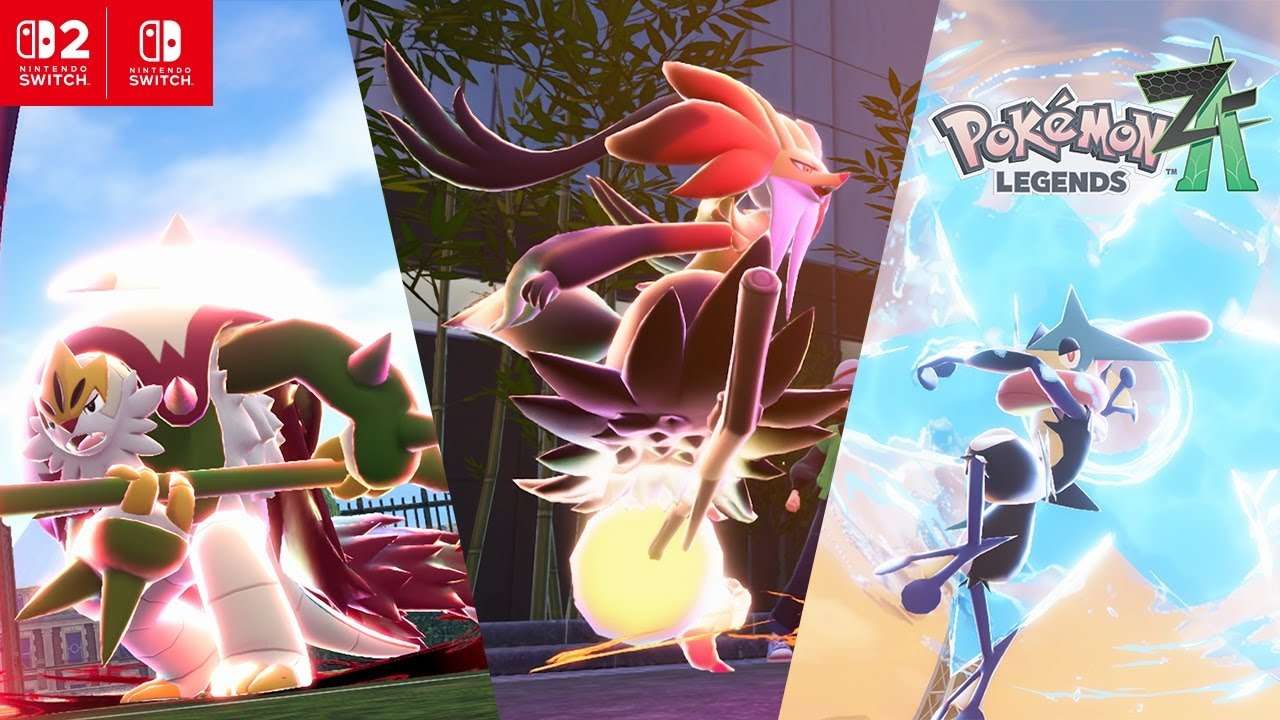 The announcement of Pokémon Legends: Z-A during the recent Pokémon Presents event sent ripples of excitement through the global gaming community. Following the successful, albeit critically divisive, experiment that was Pokémon Legends: Arceus, expectations for Z-A are sky-high. Players anticipate a fresh take on the beloved monster-catching formula, promising a return to the Kalos region with a focus on urban planning and the reintroduction of fan-favorite Mega Evolutions. However, even with these intriguing developments, a pervasive question lingers: Will Pokémon Legends: Z-A finally address the franchise’s most persistent and fundamental problem, or will it merely offer another coat of polish over underlying issues that continue to challenge its long-term appeal for seasoned players?
For years, the Pokémon franchise has walked a tightrope, balancing innovation with tradition, catering to a new generation of players while striving to retain its veteran fanbase. While its commercial success is undeniable, cementing its place as one of the highest-grossing media franchises globally, the critical discourse surrounding its core gameplay loop, narrative depth, and technical execution often highlights a concerning stagnation. Many dedicated players and video game reviewers argue that despite superficial changes and regional gimmicks, the fundamental challenge and strategic complexity in Pokémon games have dwindled, leaving a significant void in the overall gaming experience.
The Persistent Albatross: Pokémon’s Core Gameplay Problem
The ‘biggest problem’ often cited by critics and long-time fans isn’t about graphics or creature designs, though those are frequent complaints. Instead, it revolves around the lack of meaningful difficulty, the absence of a truly compelling and non-linear narrative, and a reluctance to evolve the core RPG mechanics beyond incremental updates. While Pokémon Legends: Arceus bravely attempted to redefine exploration and capture mechanics, its progression often felt repetitive, and its battle system, while streamlined, didn’t necessarily deepen strategic choices. The difficulty curve, a critical component of any engaging RPG genre title, remains largely flat across the mainline series, often remedied only by self-imposed challenges or competitive online play.
- Lack of Challenge: Opponent trainers frequently employ predictable strategies and underleveled Pokémon, making most in-game battles trivial. The absence of scalable difficulty options alienates players seeking a more rigorous gaming investment.
- Shallow Narrative: Storylines, while charming, rarely venture into complex themes or offer significant player choice, often following a predictable ‘hero’s journey’ against a one-dimensional villainous team. This limits the entertainment value for players accustomed to richer narratives in modern RPGs.
- Stagnant Core Mechanics: Beyond new Pokémon and regional forms, the fundamental ‘catch ’em all, battle ’em all’ loop has seen little evolutionary change. This impacts player engagement and the sense of genuine progression.
- Technical Performance: Despite being on the Nintendo Switch for several generations, recent titles have consistently faced criticism for graphical fidelity, frame rate issues, and general polish, suggesting a rushed game development cycle.
 Why Z-A Might Not Be the Solution We Need
The initial trailer for Pokémon Legends: Z-A showcased a futuristic interpretation of Lumiose City, with a focus on an ‘urban redevelopment plan.’ This could imply a more structured, city-centric experience compared to Arceus’s wilder, open zones. The return of Mega Evolutions is undoubtedly a popular move, appealing to nostalgia and reintroducing a beloved battle mechanic. However, these features, while exciting, don’t inherently promise to tackle the aforementioned core problems:
- Urban Planning: While potentially offering novel environmental interaction, ‘urban planning’ could easily become a cosmetic feature or a series of linear objectives rather than a deep, impactful system that alters gameplay mechanics or offers strategic depth to the world. Will it allow players to truly shape their experience or simply guide them through pre-scripted development?
- Mega Evolutions: These are a powerful, but ultimately returning, battle mechanic. Reintroducing them doesn’t fundamentally change the AI’s intelligence, the trainer’s strategy, or the overall difficulty of the game world. They enhance existing battles but don’t challenge the core combat system’s lack of complexity.
- Confined Setting: A focus on a single, albeit large, city might limit the open-world exploration that many enjoyed in Arceus, potentially reverting to more linear progression, further hindering the sense of player agency and discovery crucial for modern open-world design.
The true test for Game Freak and The Pokémon Company will be whether they leverage these new concepts to address the foundational issues. Does urban planning lead to dynamic events or morally complex choices that impact the narrative? Do Mega Evolutions become essential tools in a game with genuinely challenging opponents, demanding advanced strategic thinking from the player?
Desired Innovations and Player Expectations for the Future
For the Pokémon franchise to truly evolve and secure its future appeal beyond pure brand loyalty, player feedback suggests several key areas for reform:
- Dynamic Difficulty Settings: Implementing options for harder opponents, smarter AI, or even Nuzlocke-like modes built into the game could drastically improve replayability and cater to diverse skill levels. This is a critical factor for sustained player engagement.
- Branching Narratives: Allowing player choices to genuinely impact the story, world state, or character relationships would elevate the narrative beyond its current simplicity, providing a richer gaming experience.
- Meaningful Post-Game Content: Beyond simply filling the National Pokédex, truly challenging dungeons, competitive tournaments with unique rules, or ongoing side-quests could extend the life of each title and increase its entertainment value.
- Enhanced AI and Battle Strategy: Opponents should utilize type advantages, status effects, and held items more effectively, forcing players to adapt and strategize, rather than simply overpowering foes with brute force.
- Robust Multiplayer Experience: While competitive battling exists, improving the online infrastructure, introducing cooperative challenges, or integrating seamless social features could greatly enhance the multiplayer aspect.
The Business of Pokémon: Balancing Innovation and Commercial Success
It’s important to acknowledge the immense pressure on Game Freak. The Pokémon franchise caters to an incredibly broad demographic, from young children picking up their first RPG to veteran fans who have been playing since Red and Blue. This broad appeal necessitates a certain level of accessibility, which can often clash with the desire for hardcore challenge and deep complexity. Furthermore, the annual or biennial release cycle for mainline and spin-off upcoming Pokémon games on the Nintendo Switch puts immense strain on game development teams, often leading to compromises in technical polish and innovative features.
However, relying solely on nostalgia and accessibility risks alienating a significant portion of the audience that craves growth and evolution from the series. Long-term revenue generation and the overall health of the brand depend on continuous innovation that respectfully challenges its core principles. Many highly successful franchises manage to balance accessibility with depth, proving that it’s not an impossible feat.
 A Glimmer of Hope or More of the Same for Pokémon Legends: Z-A?
Ultimately, whether Pokémon Legends: Z-A becomes a landmark title that genuinely addresses the franchise’s biggest problem remains to be seen. The promise of urban planning and Mega Evolutions offers exciting possibilities, but they must be integrated into a larger design philosophy that prioritizes player challenge, narrative depth, and strategic engagement. Without these fundamental shifts, Z-A risks being another well-received but ultimately fleeting experience that, while fun, doesn’t move the needle far enough for those yearning for a truly evolved Pokémon game review. The gaming world watches with bated breath, hoping that this return to Kalos signifies not just a nostalgic trip, but a bold step forward in the developer strategy to redefine what a Pokémon adventure can truly be on the Nintendo Switch.