Super Mario Bros. Wonder + Meetup in Bellabel Park Review: Better Together with Friends
Super Mario Bros. Wonder + Meetup at Bellabel Park Review: A Fun Multiplayer Upgrade With Creative New Ideas
Super Mario Bros. Wonder + Meetup at Bellabel Park is not a typical upgrade. Many enhanced releases focus on improved visuals, smoother performance, or small quality-of-life additions. Bellabel Park does include new single-player content, but its main purpose is much bigger: it turns Super Mario Bros. Wonder into a lively multiplayer party experience built around Mario platforming.
That makes this upgrade both exciting and slightly unusual. Super Mario Bros. Wonder is already one of Nintendo’s strongest modern 2D platformers, known for creative Wonder effects, colorful worlds, and excellent stage design. Bellabel Park keeps those fundamentals but shifts much of the attention away from traditional solo platforming and toward short, chaotic multiplayer attractions.
For families, local groups, and players who enjoy online Mario competition, this upgrade can be a great time. For players who mainly want more classic single-player Mario levels, the value is more limited. The new content is charming and polished, but the biggest part of the package is clearly designed around multiplayer.
What Is Meetup at Bellabel Park?
Meetup at Bellabel Park adds a new area to the world map: Bellabel Park, a bright hub built around special flowers, minigames, rewards, and new challenges. The story is simple. The Koopalings arrive to steal the Bellabel flowers, and Captain Toad joins the Poplins to help recover them across the world.
If you are playing Super Mario Bros. Wonder for the first time, this new storyline appears naturally as you progress through the game. Each world includes a new brigade tent connected to one of the Koopalings. If you have already finished the main campaign, you can jump directly into the new boss stages and challenge content.
The story is light, but it gives the upgrade enough structure to feel connected to the original game. More importantly, it brings the Koopalings back in a fun way. These classic Mario villains are enhanced by Wonder Flower effects, which gives each boss encounter a more imaginative identity.
Creative Koopaling Boss Fights
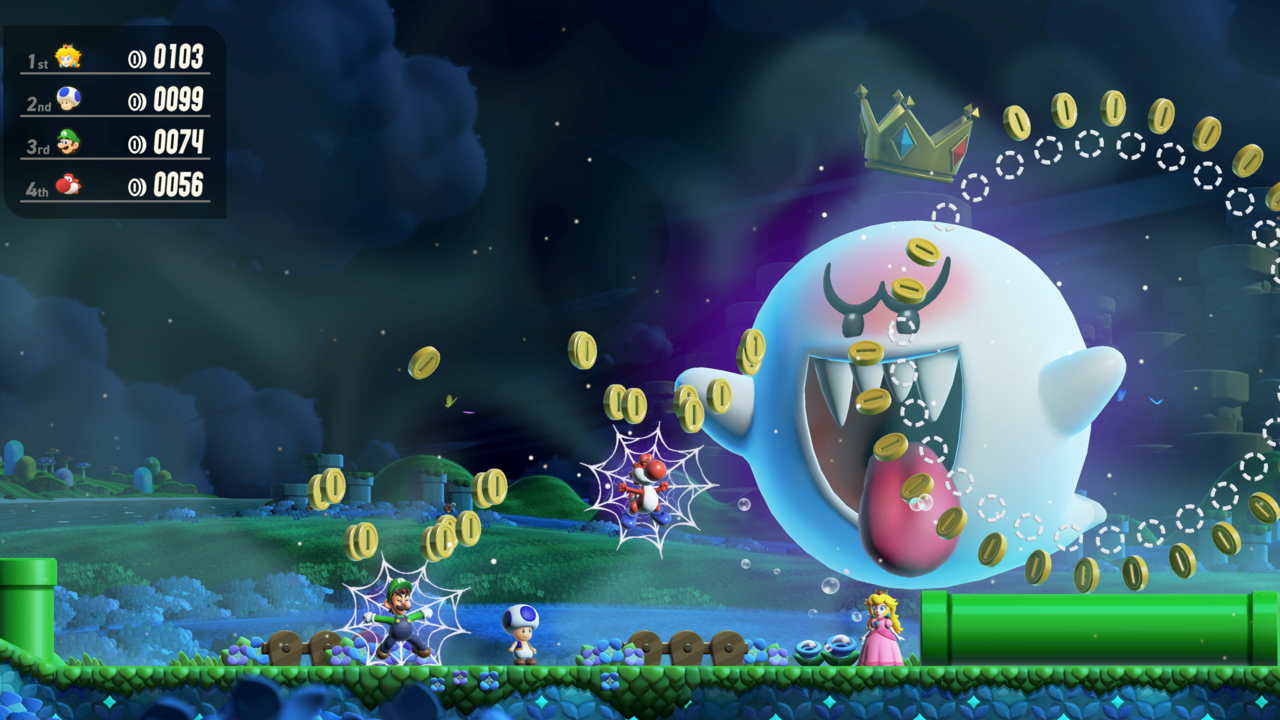
The new Koopaling stages are among the best single-player additions in Bellabel Park. Each fight reimagines a familiar Koopaling through a Wonder-style transformation. Wendy becomes a large fish-like creature, while Morton turns into a massive puppet. Before reaching each boss, players must move through a stage affected by that Koopaling’s new power.
This structure works well because it gives each battle more personality than a standard boss arena. The stage itself becomes part of the encounter. Players are not simply running to the end and jumping on a boss three times. They are dealing with strange environmental effects, altered movement, and creative stage hazards before the final confrontation.
These levels are short, but they show how well the Wonder concept can refresh familiar Mario enemies. The Koopalings have appeared many times across the franchise, but Bellabel Park gives them a playful new presentation that fits the tone of Super Mario Bros. Wonder.
Challenge Stages Add Extra Skill Tests
Bellabel Park also includes new challenge stages framed as a Toad Brigade Training Camp. These stages are designed to test specific platforming skills. Some focus on collecting coins within a time limit, while others challenge players to defeat every enemy or clear a course while staying invincible by grabbing a chain of Super Stars.
The challenges start simple but become more demanding over time. Later stages add special conditions, such as navigating as a bouncy ball or clearing a course while using tricky badge effects like Spring Feet. This gives experienced players something more demanding than the standard campaign.
The challenge stages are a strong addition because they use Mario’s core mechanics in focused ways. They are not long levels, but they are fun bite-sized tests that reward timing, precision, and knowledge of movement.
Rosalina and the Flower Pot Power-Up
One of the most noticeable additions is Rosalina, who joins the playable character lineup. In terms of gameplay, she controls like the other standard characters because of how Super Mario Bros. Wonder balances its roster. Even so, her inclusion is a welcome bonus for players who enjoy having more character options.
The more important gameplay addition is the new Flower Pot power-up. This power-up gives characters a flutter-jump similar to Yoshi’s movement, along with the ability to fire a wide flower projectile that moves vertically. It is especially useful for dealing with threats above the player or extending jumps in creative ways.
The Flower Pot is full of charm. Character animations give it personality, including a cheerful skipping motion when characters start running. It fits perfectly with the playful style of Mario Wonder.
The downside is that the Flower Pot does not get as much use as it could. It appears most prominently in the Koopaling boss stages, but it is not deeply integrated into the older campaign content unless players intentionally bring it into those levels or adjust badge setups to make it appear. The power-up is fun enough that it would have been nice to see more stages built entirely around it.
Dual Badges Are a Great New Upgrade
The biggest single-player improvement may be the addition of Dual Badges. These combine the effects of two existing badges, creating stronger and more flexible options. For example, one badge can combine Parachute Cap with Boosting Spin Jump, giving players extra height and more distance in one setup. Another can combine hidden-object tools to make secret hunting easier.
Dual Badges are excellent because they expand player expression. Badges were already one of Mario Wonder’s best ideas, and combining them makes movement and exploration feel even more customizable.
In many cases, Dual Badges feel like clear upgrades over regular badges. Once you unlock them, it may be hard to go back. That is not necessarily a bad thing, but it does make the new badges feel more like replacements than side options.
Dual Badges are obtained through a random reward system in Bellabel Park. Players earn water by completing challenge stages and multiplayer activities, then use it to water plants around the park. Rewards can include Dual Badges, flowers, emotes, decorations, and other collectible items.
Bellabel Park Is Built for Multiplayer
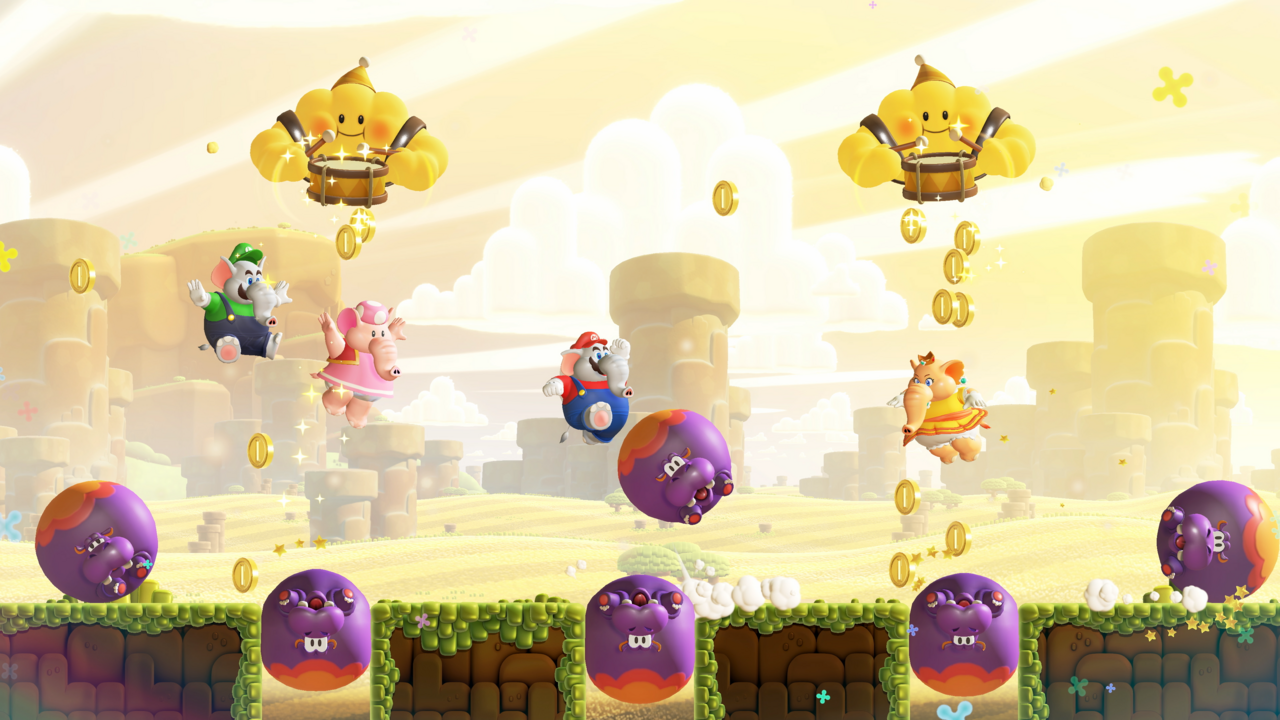
The real focus of the upgrade is the multiplayer hub. Bellabel Park is organized like a mini world map, with local multiplayer options on one side and online Game Room options on the other. Local games are split between versus and co-op attractions, and each activity usually lasts only a minute or two.
The Attraction Tour feature lets players choose a number of minigames to play in a row, along with difficulty and format options. This makes it easy to jump into a session without manually selecting every activity. It would have been better if players could remove certain minigames from the rotation or favorite their preferred ones, but the random format works well for quick party play.
The amount of content is impressive. Some attractions include several different minigame types, each with multiple courses and difficulty levels. The result is a large collection of short activities that can keep groups busy for a long time.
A Mario Party Feel With Platforming Mechanics
The multiplayer attractions feel similar to Mario Party in spirit, but they are built around traditional Mario platforming. That distinction matters. Instead of learning completely different rules for every minigame, players rely on familiar Mario skills: running, jumping, grabbing items, avoiding hazards, collecting coins, and reaching goals quickly.
This makes Bellabel Park approachable. Anyone who understands basic Mario movement can participate, even if they are not an expert platformer. At the same time, skilled players can still compete for faster times, cleaner routes, and better execution.
The best minigames find creative ways to twist familiar mechanics. One co-op Captain Toad-style challenge splits movement and jumping between two players. Another activity lets one player build platforms while others cross a stage. A hide-and-seek game allows players to disguise themselves as objects while another player tries to find them. A Baby Yoshi feeding game becomes funnier as the winning Yoshi grows larger and slower.
These ideas make the multiplayer mode feel energetic and surprising. The best moments come from the chaos: clearing a course just ahead of another player, tossing a Bob-omb to a teammate, or shouting through a co-op challenge as everyone tries to coordinate.
Good for Families, But Not Perfect for Younger Players
Bellabel Park is clearly designed with mixed-skill groups in mind. Support badges help newer players, while expert badges give stronger players extra challenge. This makes it easier for families and groups of different ages to play together.
However, there is one downside for younger players. Nabbit and Yoshi, who are usually friendlier options for beginners, still cannot use power-ups. That design choice may be familiar from the base game, but it can feel disappointing in a multiplayer-focused upgrade. Younger players may notice that their characters are not receiving the same transformations as Mario, Luigi, Peach, Daisy, or the rest of the main cast.
Even with that issue, Bellabel Park is one of the better multiplayer additions Nintendo has made for a modern 2D Mario game. It is easy to understand, colorful, fast-paced, and fun to play in short sessions.
Final Verdict: A Fun Upgrade, But Best for Multiplayer Fans
Super Mario Bros. Wonder + Meetup at Bellabel Park is a creative and polished upgrade, but its value depends heavily on how you play Mario. If you mainly want more single-player platforming, this package offers some fun Koopaling boss stages, challenge levels, Rosalina, the Flower Pot power-up, and Dual Badges. Those additions are enjoyable, but they are not a full new campaign.
If you regularly play Mario with family, friends, or online players, Bellabel Park becomes much easier to recommend. The multiplayer attractions are varied, accessible, and full of the playful chaos that makes Mario party-style experiences so enjoyable. By building every minigame around platforming fundamentals, the mode feels connected to Mario Wonder rather than simply bolted on.
This may not be the Switch 2 upgrade some fans expected, but it fits the spirit of Super Mario Bros. Wonder by constantly finding new ways to surprise players. Bellabel Park is not essential for every Mario fan, but for multiplayer households, it is a cheerful and entertaining addition.
Super Mario Bros. Wonder + Meetup at Bellabel Park FAQ
What does Meetup at Bellabel Park add to Super Mario Bros. Wonder?
It adds a new Bellabel Park hub, Koopaling boss stages, challenge levels, Rosalina, the Flower Pot power-up, Dual Badges, decorations, emotes, and a large multiplayer minigame mode.
Is Bellabel Park mainly single-player or multiplayer?
The upgrade includes single-player content, but it is primarily focused on local and online multiplayer attractions.
Does Rosalina play differently?
Rosalina is a new playable character, but she controls like the other regular characters because of the way Mario Wonder balances its roster.
Are Dual Badges worth unlocking?
Yes. Dual Badges combine the effects of two existing badges, making them very useful for movement, exploration, and challenge stages.
Is Meetup at Bellabel Park worth it?
It is most worth it for players who enjoy Mario multiplayer. Solo players will still find fun content, but the upgrade’s biggest value comes from its party-style attractions.