Temple Run 3 Silently Emerges: First Impressions from its International Soft Launch










Popular Now
 Black Myth: Wukong
 EA SPORT FC 25
 Call of Duty
 Valorant
 League of Legends
 Rust
Rust
 Warframe
 Among Us
 Stumble Guys
 Grand Theft Auto V
 In a move that has sent ripples of excitement through the global mobile gaming community, Imangi Studios’ highly anticipated sequel, Temple Run 3, has reportedly entered a soft launch phase in select international markets. This quiet rollout marks a significant milestone for one of the most iconic endless runner franchises in history, offering early adopters a glimpse into the next evolution of a beloved game. Initial player feedback from these regions suggests a largely positive reception, hinting at a polished experience ready to captivate a new generation of players while appeasing long-time fans.
The original Temple Run and its acclaimed sequel revolutionized the mobile gaming landscape, popularizing the ‘endless runner’ genre and establishing a benchmark for intuitive touch controls and addictive gameplay loops. As the mobile game industry continues its rapid expansion, driven by innovations in graphics, monetization, and social integration, the arrival of Temple Run 3 faces heightened expectations. The strategic soft launch allows Imangi Studios to meticulously fine-tune gameplay mechanics, optimize performance across various devices, and gather invaluable player data before a broader global release.
Understanding the Strategic Soft Launch Phase
For those unfamiliar with industry practices, a ‘soft launch’ is a common development strategy where a game is released in a limited geographical area, often smaller markets or regions with specific demographic profiles. This controlled environment enables developers to:
- Test Core Mechanics: Ensure the fundamental gameplay loop is engaging and free of critical bugs.
- Gauge Player Retention: Analyze how long players stick with the game and identify potential drop-off points.
- Evaluate Monetization Strategies: Experiment with in-app purchases (IAPs), ad placements, and battle pass systems to find the optimal balance for revenue generation without alienating players.
- Stress Test Servers: For games with online components, it helps ensure server stability and scalability.
- Gather Feedback: Collect early player feedback to implement crucial changes and improvements before a major worldwide debut.
The choice of specific countries for Temple Run 3’s soft launch remains somewhat under wraps, typical for such stealthy rollouts. However, reports indicate players in certain Asian and European territories are among the first to experience the game, providing crucial insights that will shape its final form.
 A Glimpse into Temple Run 3: What’s New?
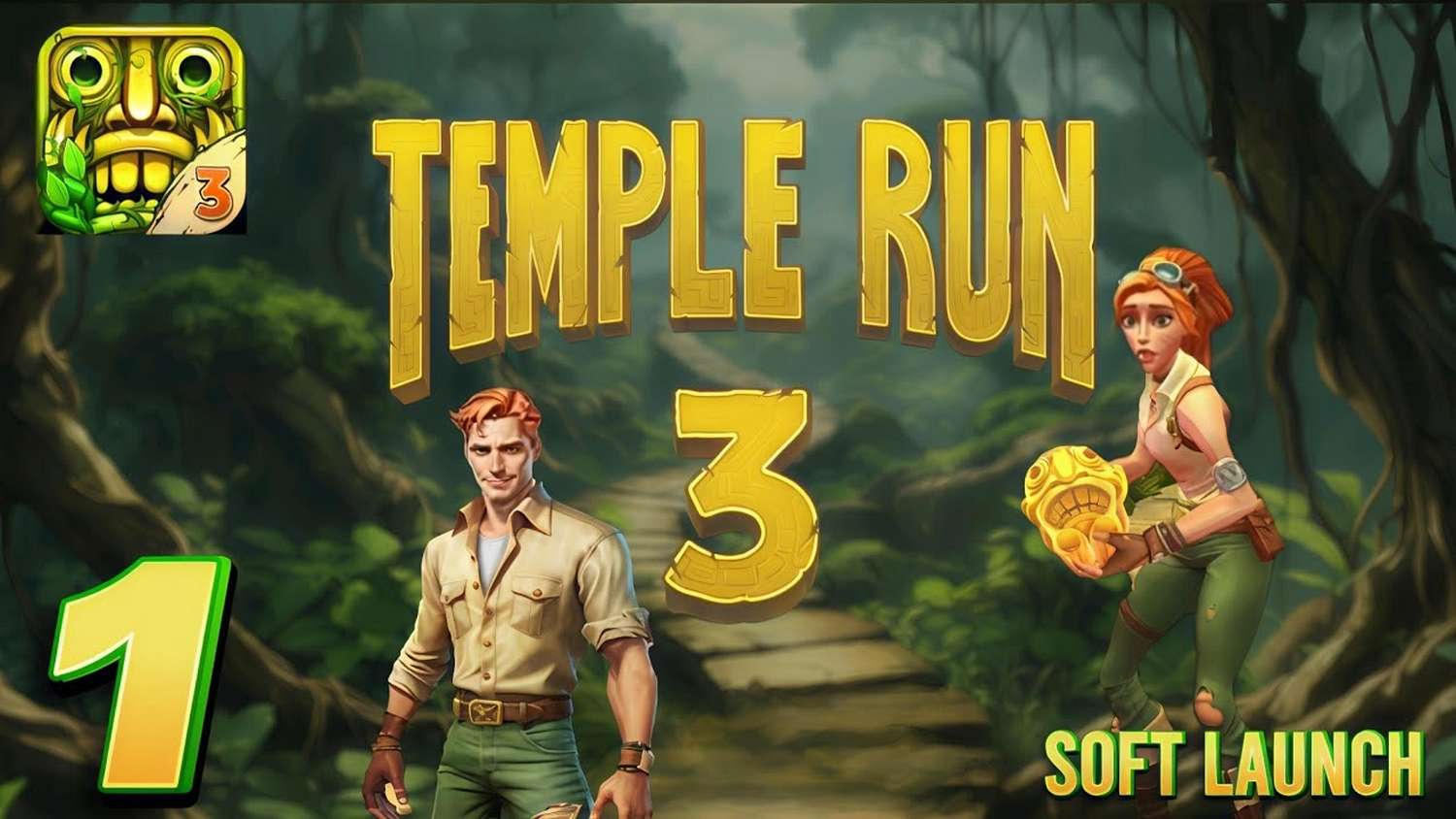
While official details from Imangi Studios are scarce, early player impressions and leaked screenshots paint a vivid picture of what Temple Run 3 brings to the table. The core endless runner mechanic remains intact – players navigate perilous ancient ruins, dodging obstacles, collecting coins, and escaping monstrous pursuers – but with significant enhancements:
- Graphics Overhaul: The most immediately noticeable improvement appears to be a substantial visual upgrade. Expect more detailed environments, enhanced lighting effects, more fluid character animations, and a higher overall fidelity that leverages modern mobile hardware capabilities. This aligns with current trends in high-quality mobile gaming, pushing the boundaries of what’s achievable on handheld devices.
- Expanded Environments: Beyond the familiar jungle and ice temple settings, reports suggest new, diverse environments with unique hazards and aesthetic themes, providing greater visual variety and gameplay challenges. Each zone likely introduces distinct obstacle patterns and visual flair, keeping the experience fresh for prolonged play sessions.
- New Characters and Abilities: The roster of playable characters is expected to expand, each potentially bringing unique stats or unlockable special abilities that add a layer of strategic depth. Customization options for characters, a popular feature in many modern mobile titles, are also likely to be present, allowing players to personalize their running experience.
- Enhanced Power-Ups and Artifacts: The iconic power-ups (coin magnet, shield, boost) are likely to return, possibly alongside new, more dynamic options. Furthermore, a deeper artifact or collectible system might be integrated, offering long-term progression goals and lore development within the Temple Run universe. This could significantly boost player engagement and retention, making the chase for rare items a compelling reason to keep playing.
- Refined Controls and Physics: While the intuitive swipe-and-tilt controls are fundamental to the franchise’s appeal, Temple Run 3 likely features subtle refinements to improve responsiveness and player agency. Advanced physics engines could lead to more dynamic interactions with environmental elements, making each run feel more immersive and less predictable.
 Initial Reception: A Wave of Positive Feedback
The early buzz surrounding Temple Run 3 is overwhelmingly positive. Players have lauded the game for its:
- Familiar Yet Fresh Gameplay: Many reviewers highlight that the game successfully retains the core addictive loop that made its predecessors so popular, while introducing enough new content and polish to feel like a genuine evolution rather than a mere iteration. This delicate balance is crucial for retaining the existing fanbase and attracting new players in the competitive mobile game market.
- Stunning Visuals: The graphical upgrades are a frequent point of praise, with players appreciating the improved immersion and visual fidelity. This elevates the endless runner experience beyond simple arcade gameplay, positioning it as a premium mobile title.
- Engaging Progression: Initial reports suggest a well-structured progression system, including challenges, achievements, and unlockables that provide a strong incentive for continued play. This is vital for a free-to-play model, encouraging long-term user interaction.
- Fair Monetization: While details are still emerging, early feedback indicates that the in-app purchase system, if present, is not overly aggressive or